
Fewer Frappuccinos, More Character
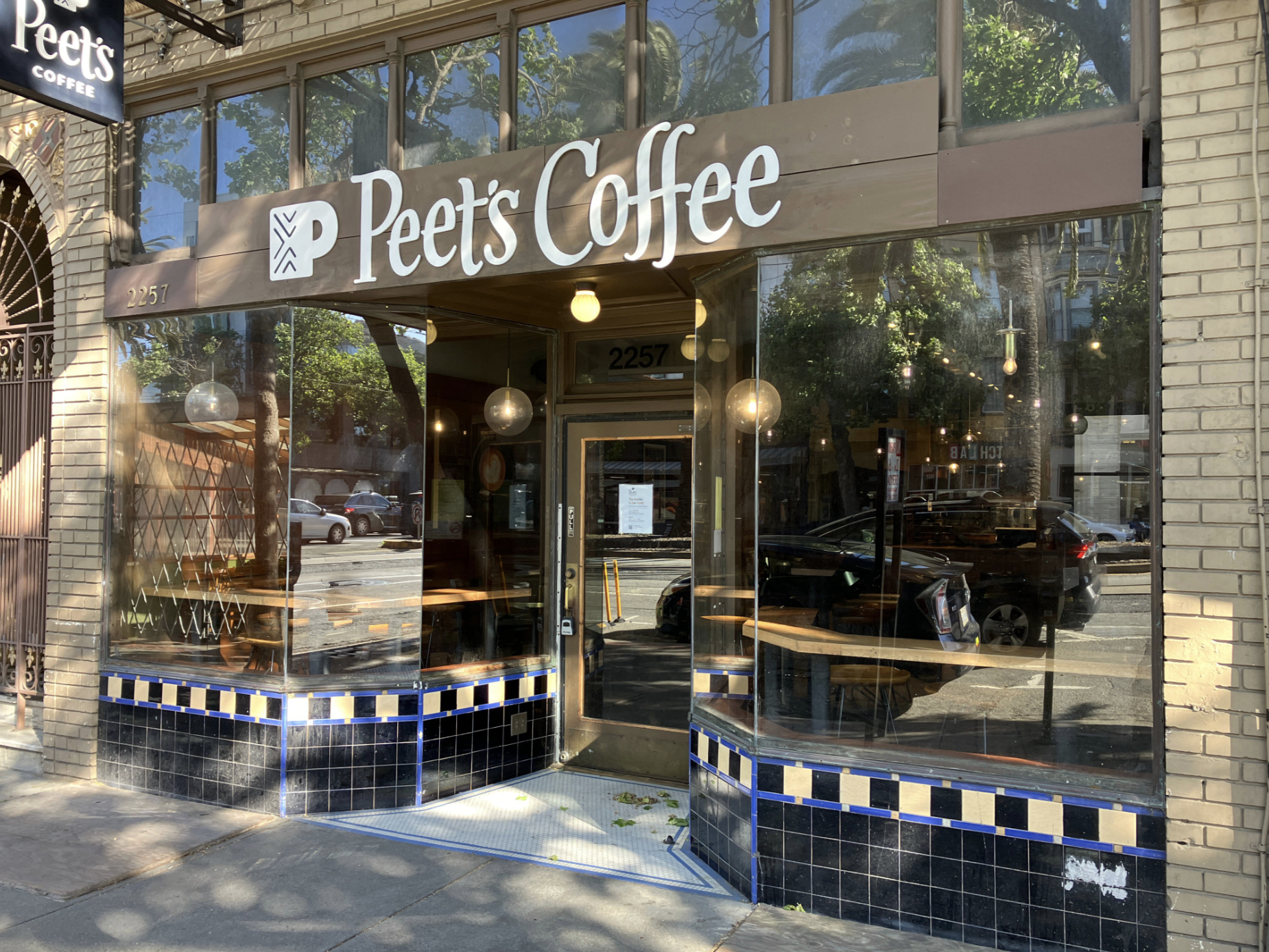
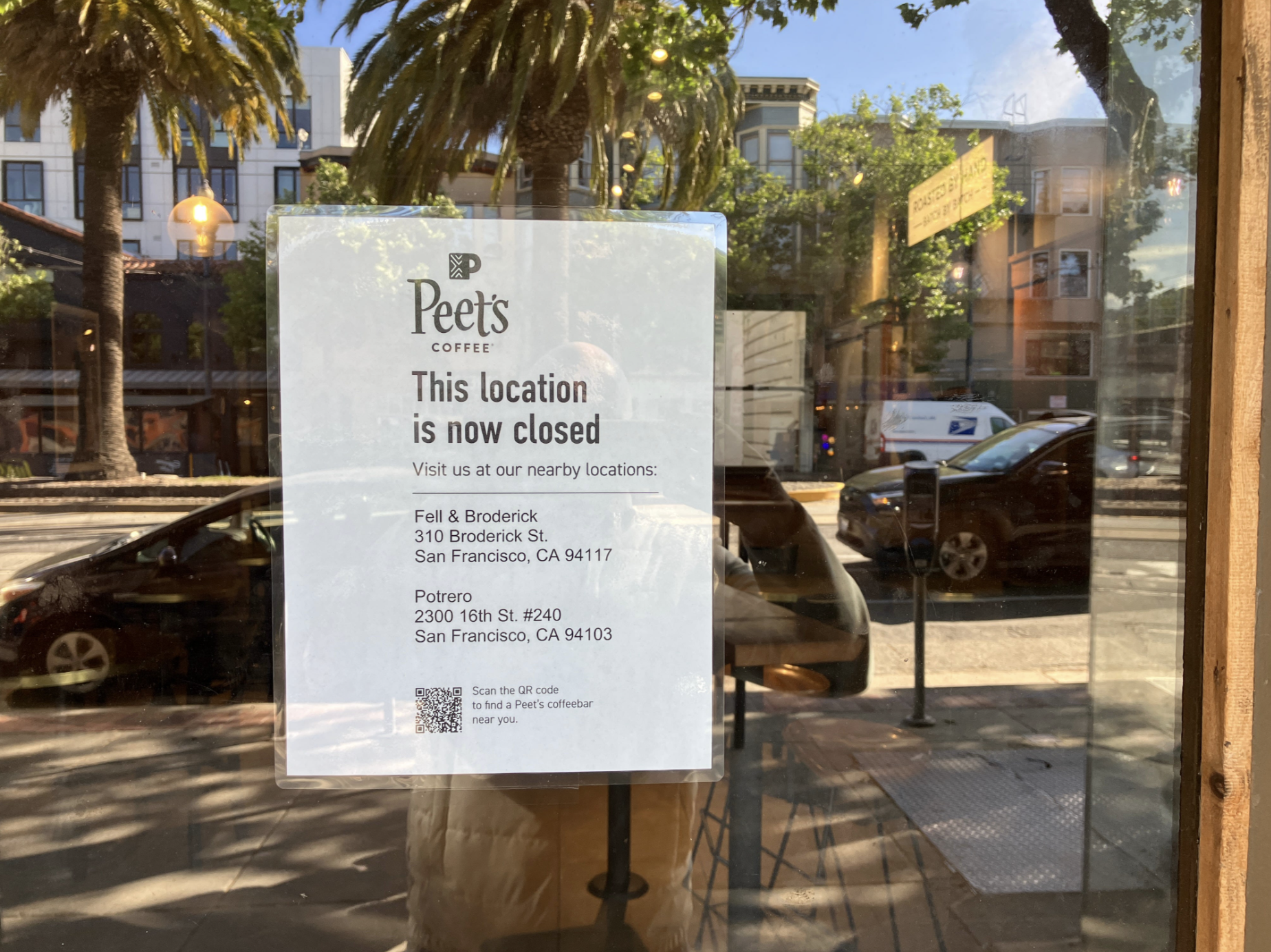
When the Peet’s on Market Street at 16th Street closed, it felt like something more than a storefront going dark.
I had been going there for more than 30 years.
It was never the most remarkable coffee shop in the city. It wasn’t trying to be. But it was steady and familiar. A place that anchored a corner of the Castro in a way that only long-running places can. You knew what you were going to get. You knew who you might see.
And then it was gone. Peet’s had been acquired by Keurig Dr Pepper, and the new owners wasted no time in shaking this up (or would it be, shaking things down?). At least 30 locations have closed, with most closures in the Bay Area where Peet’s first originated.
At the time, it was easy to read that closure as one more data point in a familiar narrative: San Francisco, hollowing out. Corporate giants in, local institution out. Another sign that the city was slipping into something less recognizable.
But that wasn’t the whole story.
A small confession about coffee
I should admit something here. I’ve had a bit of a grudge against Starbucks for years.
Not because of the coffee, but because it has a habit of absorbing things I liked and sanding them down.
Pasqua Coffee was one of them. Remember them? Long gone. La Boulange was another. Both had their own texture, their own identity, their own way of being in the city. And in both cases, Starbucks acquired them and, in time, replaced that local character with something standardized. Efficient and consistent, yes, but to my mind, also diminished.
So when the Castro Peet’s closed, it felt like part of that same long arc—the slow flattening of local places into something interchangeable.
But what’s happening now is not that.
What moving in now
While the Peet’s on Market Street in the Castro (as well as the Starbuck’s on 18th Street) remain closed for now, in other parts of the city something else has been happening—quieter, less visible at first.
Local businesses were moving in.
Across downtown, particularly around Yerba Buena and the Financial District, independent operators have been taking over the very spaces that chains left behind. At 22 Battery Street, where Peet’s, Jamba Juice, and Specialty’s once stood, you now find Flywheel Coffee, Boichik Bagels, and a new generation of local tenants.
The pattern repeats itself block after block.
In the past year alone, 25 of 30 new ground-floor businesses near Moscone Center were Bay Area–born. Many stepped directly into spaces vacated by Starbucks, Subway, Chipotle, and others.
That kind of shift would have been hard to imagine before the pandemic.
Meanwhile, the Castro, it turns out, is part of the same story. The San Francisco Standard describes how the closure of chain cafés opened the door for something else to take root. Independent coffee shops have stepped in, not simply to replace what was lost, but to restore something that chains, for all their efficiency, rarely provide: a sense of belonging.
Places where people linger, where the transaction is secondary to the experience, and where a cup of coffee is less about speed and more about staying.
That distinction matters more than it might seem. Because what disappeared with those chains was not just retail—it was a certain kind of predictability. And what is replacing it is something less uniform, but more alive.
The quiet inversion
For years, much of San Francisco’s commercial landscape was optimized for sameness.
Multiple Starbucks on the same block, interchangeable storefronts, and a kind of placeless convenience that was especially pronounced downtown. That model depended on a very specific set of conditions: full office towers, steady commuter flows, and a retail ecosystem built on scale.
When those conditions collapsed, so did the model.
And in its place, a different kind of economy has begun to emerge. This one favors operators who can adapt, negotiate, and embed themselves in a neighborhood.
Landlords, facing vacancies they can no longer ignore, are offering lower rents and more flexible terms. They are, in some cases, actively seeking out “something local, something different.”
The ground floor of the city is being renegotiated.
It would be easy to frame all of this as a recovery story.
Yes, San Francisco is back. But that suggests a return to what existed before. And that is not what this feels like.
The city is not rebuilding the retail landscape it lost. It is constructing a new one—less uniform, less dependent on national chains, and more reflective of the people who actually live here.
Even downtown, long defined by corporate retail, is starting to take on a different character. Not fully restored, not yet stable, but undeniably shifting.
More of the businesses shaping the city are from here. Rooted here, and invested in staying.
A city, recalibrated
I still miss that Peet’s.
And, if I’m being honest, I still carry a bit of that old irritation about what happened to places like Pasqua and La Boulange.
There is something irreplaceable about a place that quietly becomes part of your routine over decades. Something that doesn’t need to announce itself to matter.
But cities don’t hold still. They evolve, sometimes in ways that feel like loss before they reveal themselves as change.
And with that said, there are no guarantees in this transition.
Local businesses are more fragile. The economics are still uncertain. The recovery is uneven. But the direction is becoming clearer.
As national chains pull back, local operators are not just filling empty storefronts. They are redefining what those storefronts are for. And in doing so, they are reshaping the experience of the city itself.
Not into what it was, but into something that, for the first time in a while, feels a little more like San Francisco.