
San Francisco’s Housing Market Is Hot at the Top, but Opportunity Is Hiding in the Middle
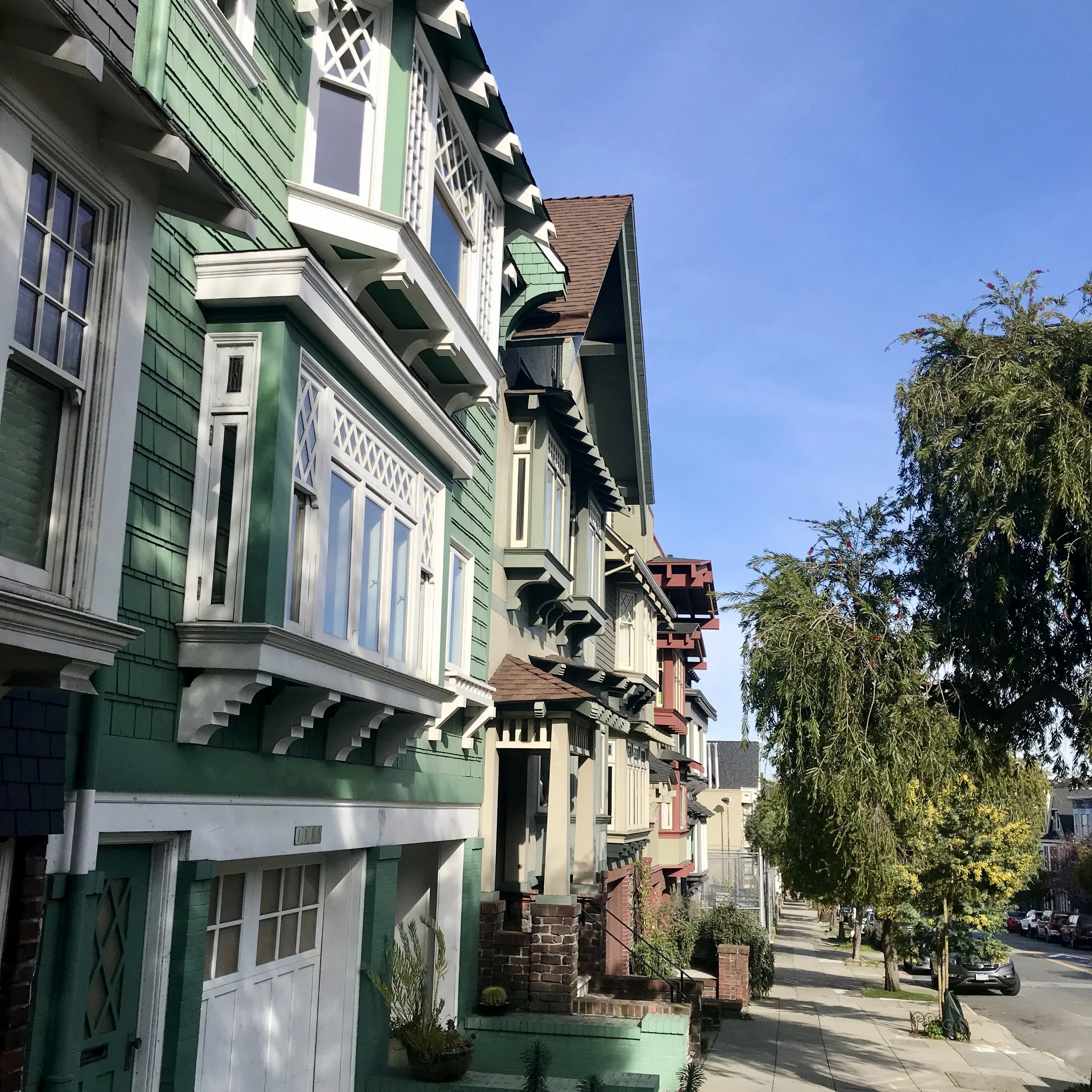
The San Francisco housing market is having one of those moments when the headline and the lived experience do not quite match.
The headlines say the market is hot. And in many cases, that is true. Certain homes are drawing multiple offers. Some are selling far above asking, and the ones selling way over asking are attracting the headlines. Well-located single-family homes, especially the luxury ones with character, space, a garage, and the right neighborhood setting, are attracting the kind of competition that makes buyers wonder whether there is any ceiling at all.
But that is not the whole market.
The more interesting story is that San Francisco (like the Peninsula) is not experiencing one housing market right now. It is experiencing several housing markets at the same time. While some are scorching, others are steady and some are surprisingly soft.
That distinction matters, because a buyer or seller who simply hears “San Francisco is red hot” can easily make the wrong decision and give up before even starting.
At the top end, the market has accelerated dramatically. Luxury homes are moving, especially in the upper price ranges, and the article noted a surge in sales above $10 million. Homes in the $5 million to $10 million range also showed strong growth. Meanwhile, homes between $1 million and $2 million were essentially flat year over year. That is a striking contrast, especially because the $1 million to $2 million range represents much of the market that ordinary, even well-paid San Francisco buyers actually occupy.
Single-family home prices reached record levels this spring, with the median sale price for single-family homes climbing above prior peaks. However, Bay Area housing remains caught between renewed optimism and serious affordability constraints.
This is the strange shape of the current market: wealth is moving aggressively (particularly for cash buyers), while many financed buyers are hesitating or feel shut out.
That does not mean lower-priced homes are unwanted. It means buyers at those price points face a different set of constraints. They are more sensitive to interest rates and more dependent on financing. They are often stretching to buy, even when their incomes are strong by any normal national standard. They may want to move, but they are also calculating monthly payments, HOA dues, insurance, taxes, and the risk of buying into a market that still feels expensive even when a particular property has softened.
At the same time, the most desirable homes are pulling away from the rest of the market. This is especially true for homes that feel distinctive. A classic Edwardian in a prime neighborhood is not the same product as a newer one-bedroom condo in a downtown or Mission Bay tower. A single-family home with usable space, good light, parking, and architectural charm is not interchangeable with a compact unit in a large building.
We’ve been hearing that inventory of homes for sale are at historic lows. This is not just in San Francisco, it’s happening all over the country. But here, things are particularly scarce in some market segments, but not all. And that may be the key to understanding San Francisco right now.
A “one-of-one” home can still produce fierce competition. A “one-of-many” condo has to work harder. The market is pricing uniqueness, not just location. It is rewarding homes that feel special and penalizing homes that feel generic, compromised, or expensive to carry.
This is why the condo market remains so interesting. On paper, condos have been showing signs of recovery. Some reports have pointed to improved condo pricing and stronger activity compared with the lows of the post-pandemic period. But that does not mean every condo is suddenly in demand. There is a major difference between a distinctive luxury condo with views and amenities, a well-located unit in a desirable neighborhood, and a smaller unit in a big tower with high monthly HOA dues.
For some buyers, the math still does not work. A condo that appears attainable based on the purchase price can look very different once the monthly cost of ownership is calculated. Mortgage payment, property tax, insurance, and HOA dues all matter. In a higher-rate environment, a large HOA payment can feel like a second mortgage. Even when the market is improving, that monthly cost can keep buyers on the sidelines.
This helps explain why smaller downtown and South of Market condos can lag while single-family homes in established neighborhoods draw multiple offers. It is not that buyers dislike condos. It is that the buyer pool for those units is more cautious, more rate-sensitive, and more focused on the total cost of ownership.
The same divide shows up in the psychology of the market. At the top end, some buyers appear to have elastic budgets. They are often supported by stock wealth, private company equity, or confidence in the city’s next technology cycle. Some of this renewed energy is connected to the artificial intelligence boom, which has given San Francisco a fresh version of a familiar story: a new generation of technology wealth looking for homes in a city with limited supply. For those buyers, a special home in the right location can become a must-have asset. Price matters, but only up to a point.
For entry-level and move-up buyers, price matters every month. These buyers may still want San Francisco. Many may believe in the city’s long-term future but they are not bidding with unlimited confidence. They are looking at interest rates, job security, closing costs, repair costs, and the difference between owning and renting. They may be willing to compete for the right property, but they are far less forgiving when a home has flaws.
That creates a market that can look irrational from the outside. One home gets 10 offers, while another similar-looking home sits. One seller gets a record price, while another has to reduce. One buyer loses three (or more) times in a row, while another finds leverage in a segment where nobody else is paying attention.
For sellers, this means pricing strategy matters more than the headlines. It is tempting to read about record-breaking sales and assume that every property can ride the same wave. But that is dangerous. The strongest prices are going to properties that meet a very specific buyer demand. If a home has a difficult layout, deferred maintenance, no parking, limited outdoor space, high HOA dues, or a less compelling location, the market may not forgive those issues the way it did when interest rates were lower.
If your home is truly in the path of demand, thoughtful preparation and strategic pricing can still produce an excellent result. But if your property has obvious compromises, pretending those compromises do not exist will usually lead to a longer time on market. In this environment, overpricing can be especially costly because buyers are watching closely. They may be aggressive, but they are not indiscriminate.
This is especially important because the public narrative can move faster than the actual market. Sellers hear about bidding wars, record prices, and AI millionaires. Those stories are real. But they do not apply equally to every property type, every neighborhood, or every price point. A seller who prices a generic condo as if it were a rare single-family home in Noe Valley is likely to be disappointed.
For buyers, the lesson is more nuanced. If you are chasing the most desirable single-family homes in the most competitive neighborhoods, you need to be prepared. That means having financing fully lined up, understanding disclosures before the offer date, knowing your ceiling, and accepting that you may lose before you win. In that segment of the market, hesitation can be expensive.
But if you are open to a property type or location that is not attracting the same level of competition, you may have more leverage than the headlines suggest. Smaller condos, homes with fixable flaws, or properties that have been sitting for several weeks may offer room for negotiation. That does not automatically make them bargains, but it does mean the market is not uniformly stacked against buyers.
Right now, the perception is that everything in San Francisco is flying off the shelf. The reality is more layered. The luxury market is surging, and distinctive single-family homes are highly competitive. Meanwhile, entry-level buyers are under pressure, and downtown condos are uneven. Some sellers are overconfident, and some buyers are exhausted. Somewhere in the middle, deals are still happening.
There is also a larger question hovering over the market, which lots of people have been asking: how durable is this cycle?
The optimistic case is straightforward. San Francisco has renewed economic momentum. Artificial intelligence companies are growing, and office attendance is no longer the only measure of urban health. The city’s best neighborhoods remain globally desirable, and housing supply is limited. When demand returns to a market like San Francisco or the Peninsula where supply is constrained, prices can move quickly.
The cautious case is also real. Affordability is stretched, and interest rates remain a major constraint. The stock market and private-company valuations can change. Some of today’s buyer confidence may be tied to expectations about future wealth that has not fully materialized. And parts of the condo market are still working through the aftereffects of the pandemic, remote work, and changing preferences about downtown living.
Both stories can be true at the same time, and that may be the defining feature of San Francisco housing in 2026. It’s not a boom for everyone, but it’s not a simple return to the old market either. Instead, it’s a city where demand has become more selective, more segmented, and more sensitive to the total cost of ownership.
For anyone trying to make a decision, the question is not “How hot is the market?” The better question is: “Which market am I actually in?”